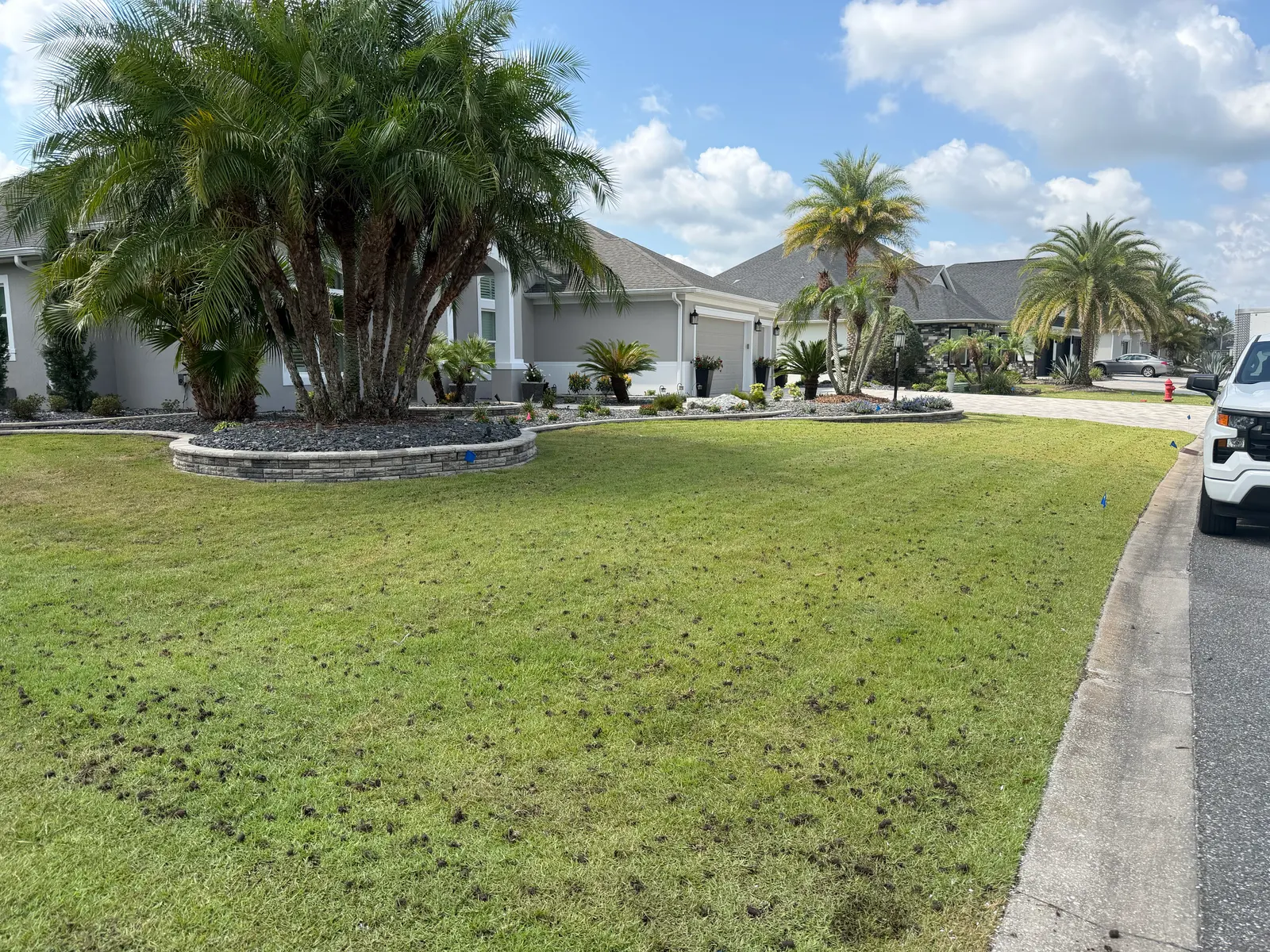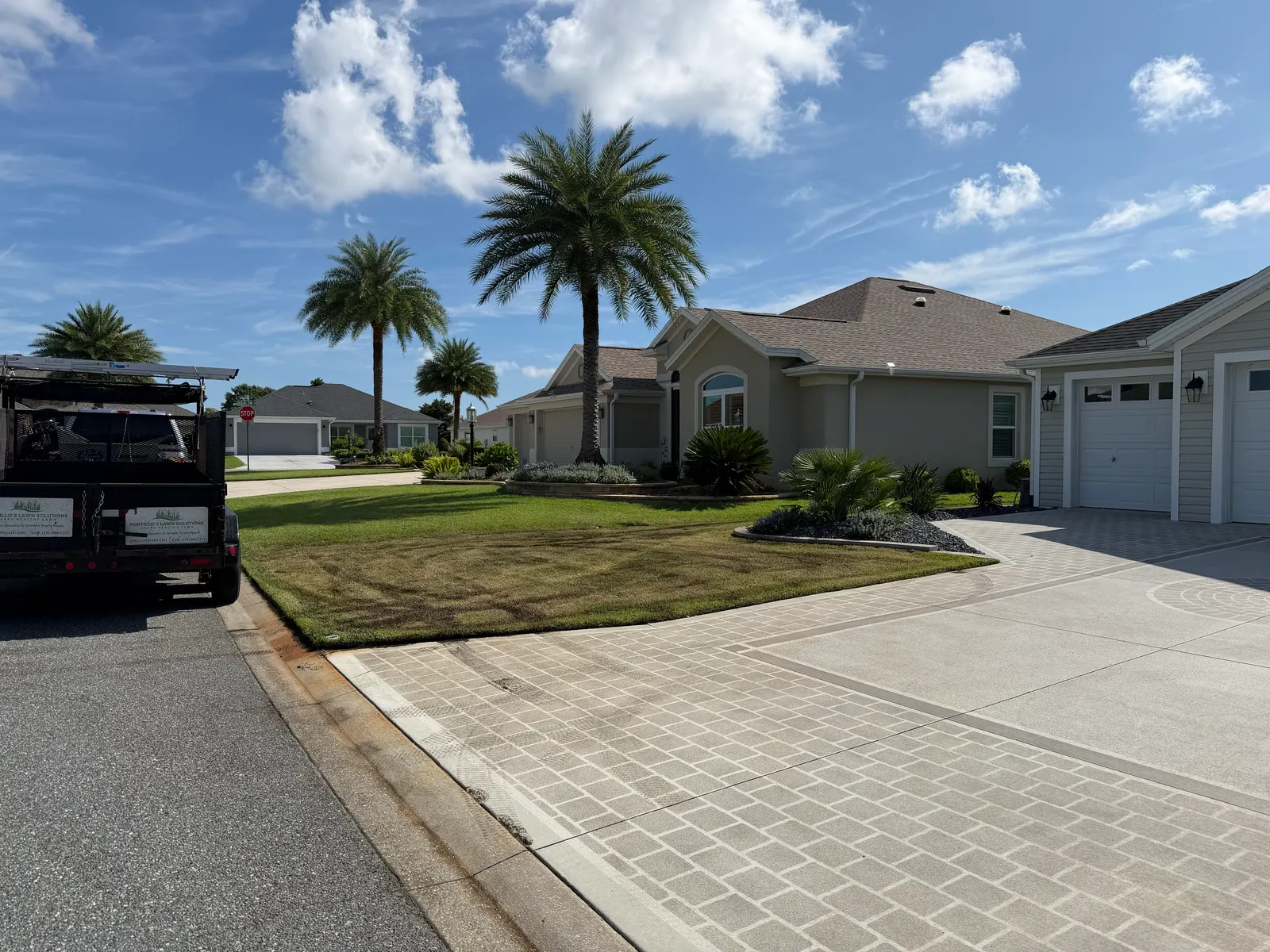
What is thatch—and when does your lawn need dethatching?
A little thatch is normal. Too much turns your lawn into a sponge. Here's how to tell the difference and what dethatching actually does.
Thatch is the layer of dead grass, roots, and organic matter that sits between the soil and the green blades of your lawn. A thin layer is healthy. But when it gets too thick, it traps water, blocks airflow, and keeps new growth from breaking through.
How to know if you have too much
- The lawn feels spongy or bouncy when you walk on it
- Water sits on top instead of soaking in
- You can see a thick brown mat below the green
- Grass looks thin even with regular watering
What dethatching does
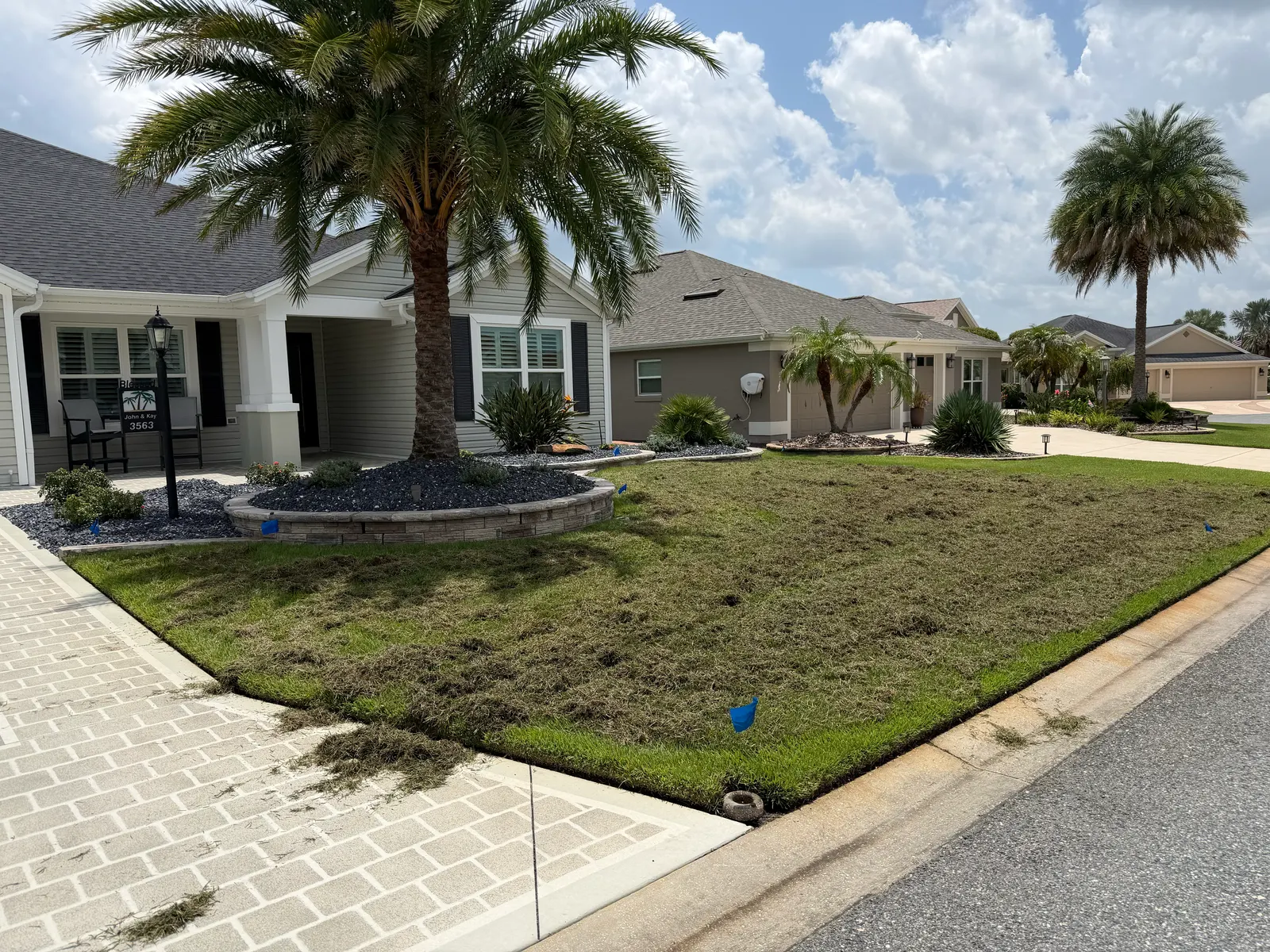
Dethatching mechanically removes the excess buildup so the surface can breathe again. We power-dethatch the lawn, lift the loosened material to the surface, and haul it away—so you're not left with a mess.
Dethatching pulls up dead material, so the lawn can look thinned-out briefly. With proper watering and mowing it fills back in over the following weeks.
Dethatching vs. aeration
They're not the same thing. Dethatching removes the dead organic layer on the surface; aeration relieves soil compaction below. Many lawns benefit from both—often dethatching first, then aeration.
Ready to price this service?
Get clear, upfront pricing for dethatching in under a minute.