Why you should NOT dethatch a St. Augustine lawn
It's the most common lawn mistake we see in The Villages—and we'll turn down the job before we damage your grass. Here's why.
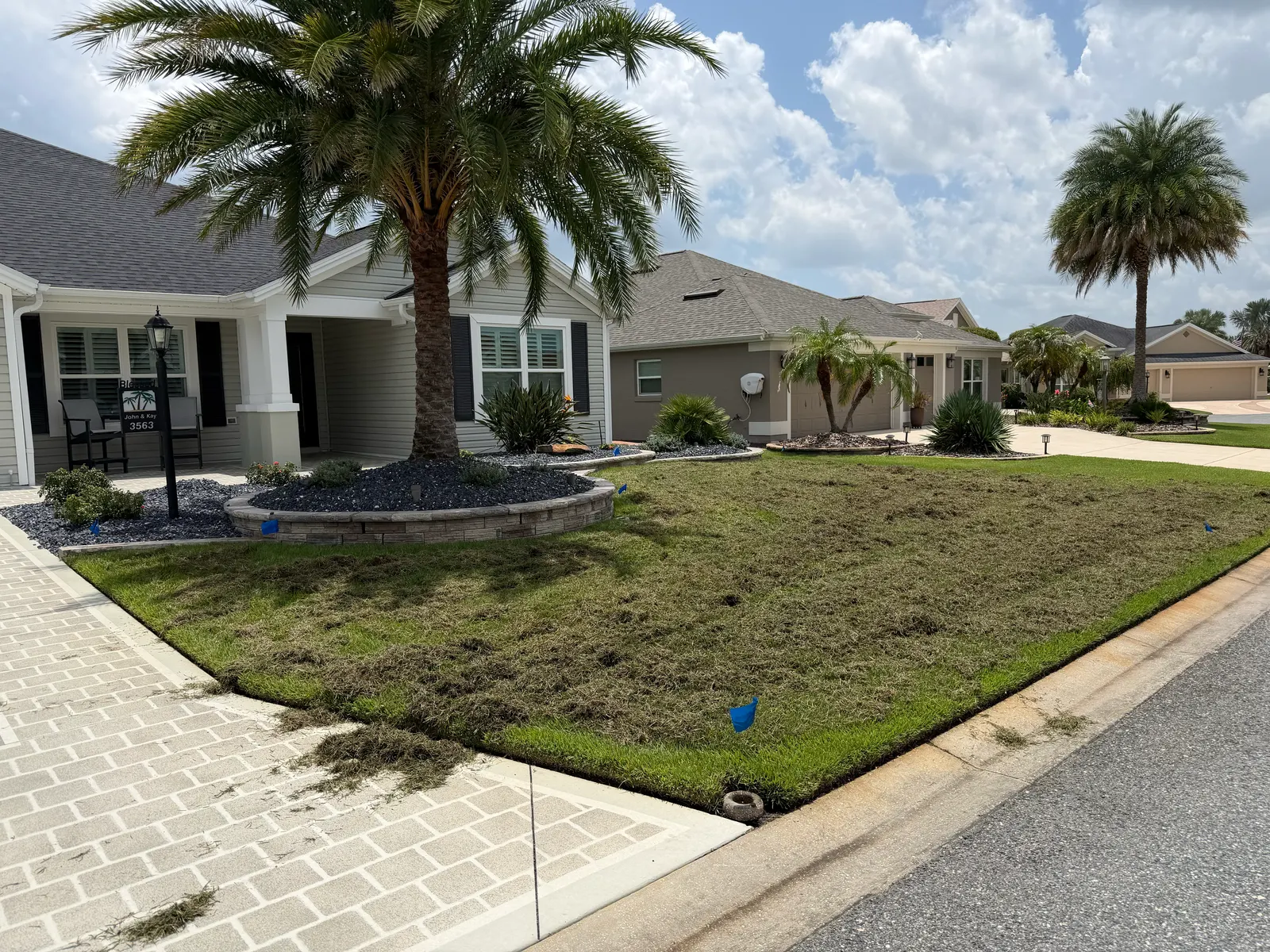
Here's a request we get all the time in The Villages: "My St. Augustine lawn feels spongy—can you dethatch it?" And here's our answer, even when it costs us the job: no, not the whole lawn. Power-raking an entire St. Augustine lawn can do real damage. It's the single most common lawn-care mistake we see, so let's clear it up.
What dethatching actually is
Thatch is the layer of dead stems, roots, and runners that builds up between the soil and the green blades. A thin layer is normal and even healthy. When it gets too thick, it traps water and blocks air—and dethatching (or "power raking") mechanically rips that excess layer out.
That's a great service… for the right grass.
Why St. Augustine is different
St. Augustine spreads by stolons—thick runners that grow across the top of the soil. Those runners are how the lawn fills in and stays dense. A power rake is designed to tear out material at the surface, which is exactly where St. Augustine's runners live.
Run a dethatcher across a whole St. Augustine lawn and you don't just pull dead thatch—you shred the living runners and can damage the shallow root system. You can take a lawn that looked tired and leave it genuinely thin and torn up.
Dethatching is built for Zoysia (and Bermuda)—grasses that handle it. It is not built for whole-lawn St. Augustine. We'll tell you that even if you came in asking for the opposite.
So what do we do for St. Augustine instead?
We don't ignore the problem—we treat it correctly:
- Assess first. We look at how much buildup you actually have. Spongy can mean thatch, but it can also mean compaction or over-watering, which call for different fixes.
- Spot-treat, don't strip. If a specific area is genuinely matted, we work that section by hand or with a light pass—never a full-lawn power rake.
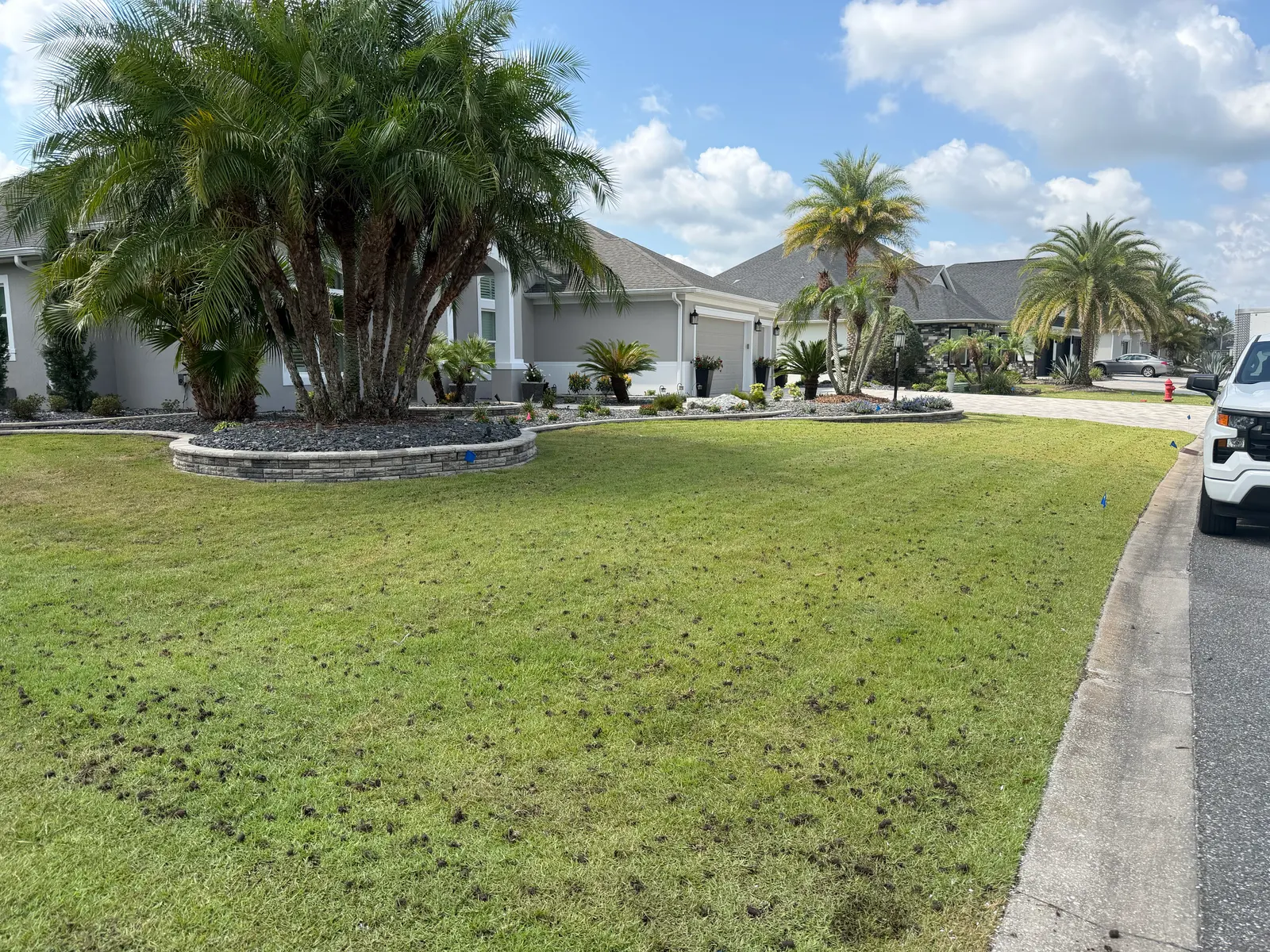
- Aerate and top dress. For most St. Augustine lawns, core aeration and a compost top dressing do far more good than dethatching ever would: they relieve compaction and improve the soil without tearing up the runners.
"But my lawn really is spongy"
It might be—and the cause matters. A spongy St. Augustine lawn is often compaction or shallow, frequent watering, not a thatch problem. Aeration usually addresses the first; adjusting your watering addresses the second. If there's a true thatch issue, we handle it as a targeted spot-treatment, not a blanket dethatch.
This is also where knowing your grass pays off. The newer southern Villages are almost always St. Augustine; the central Villages are more often Zoysia, which does benefit from dethatching. Not sure which you have? Our grass type guide walks you through it.
Why we'd rather lose the sale
We could say yes, run a power rake across your whole St. Augustine lawn, take the money, and move on. Some companies do. We'd rather give you the honest recommendation and keep your lawn intact—because doing the work right is the whole point.
If your lawn feels off and you're not sure what it needs, that's exactly the kind of call we're happy to make for you.
Want a straight answer and an upfront price? Get pricing in under a minute, or call and we'll tell you honestly what your lawn does—and doesn't—need.
Ready to price this service?
Get clear, upfront pricing for dethatching in under a minute.