Lawn care under The Villages water restrictions: what you can (and can't) do
You can't water your way around a restriction—but you can help your soil make the most of every drop. Here's how, honestly.
If you live in The Villages, you're watering on a schedule whether you like it or not. Drought and Central Florida's water restrictions limit when and how much you can irrigate—and that's frustrating when you're trying to keep a lawn looking its best. The honest truth: you can't out-water a restriction. But you can help your soil use every drop it gets. Here's the realistic playbook.
First, what's actually in your control
A lot of lawn advice ignores the obvious: you don't control the weather, the watering schedule, or whether your irrigation is hitting the right spots. Those are the biggest factors in how a lawn looks during a dry stretch—and they're largely out of your hands.
What you can influence is how well your soil holds and uses the water it's allowed. That's where a couple of services and a few habits make a real difference.
Help the water soak in: aeration
Sandy Central Florida soil compacts—under foot traffic, mowing, and especially on newer construction lots. When soil is packed down, water runs off or pools instead of soaking in, so even your allowed watering is partly wasted.
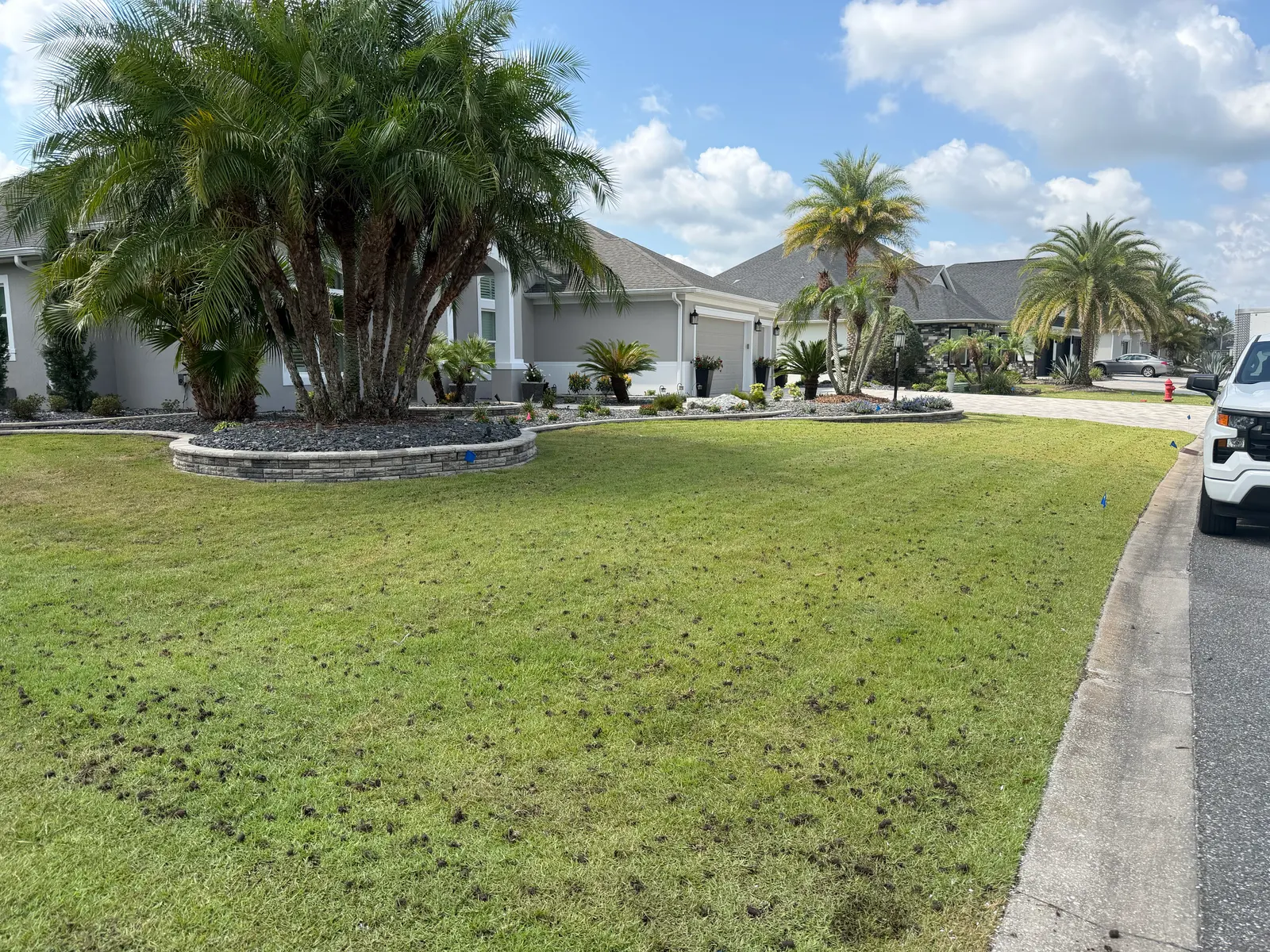
Core aeration pulls small plugs to open the soil back up, so water reaches the root zone instead of sheeting off. Under a restriction, that's the difference between water that helps and water that runs to the curb.
Help the soil hold moisture: top dressing
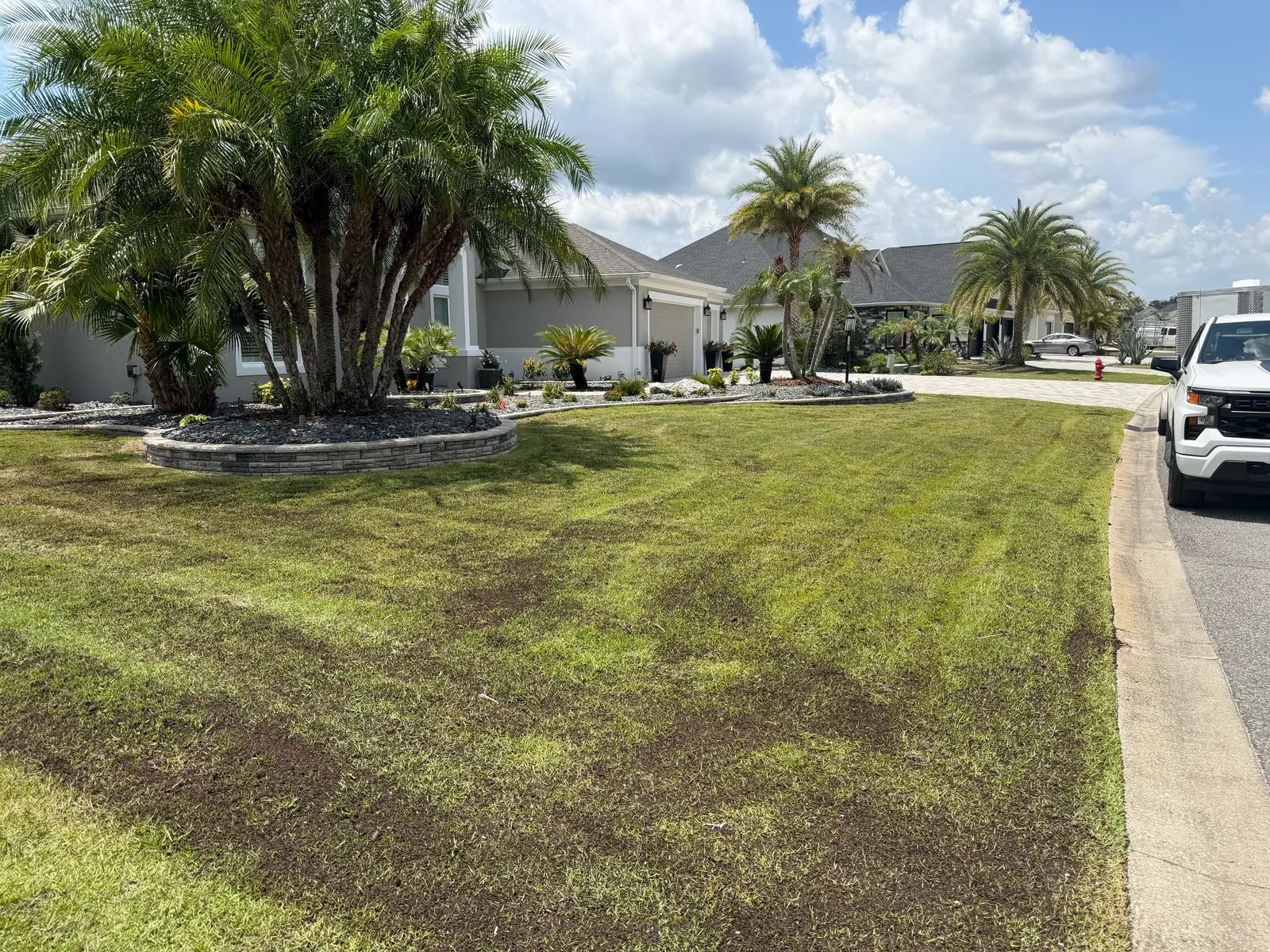
A compost top dressing adds organic matter to thin, sandy soil—and organic matter holds moisture. Worked into an aerated lawn, it helps the ground stay damp longer between watering days. It won't make a restriction disappear, but it stretches what you're allowed to apply.
We're straight with you: these services give your soil a better foundation, but they don't guarantee a green lawn. How your grass looks still depends on watering, irrigation, mowing, sunlight, and grass type—most of which come down to your day-to-day care. We guarantee the service is done right, not a specific result.
Four habits that stretch limited water
- Water deep and infrequent. Encourage roots to grow down toward moisture rather than staying shallow. Early morning is best—less evaporation, less disease risk.
- Mow higher. Taller grass shades the soil, slows evaporation, and grows deeper roots. Cutting too short stresses an already-stressed lawn.
- Keep mower blades sharp. A clean cut loses less water than a ragged, torn one.
- Check your irrigation coverage. Clogged or misaimed heads waste your allowance on the driveway. Fixing coverage is one of the cheapest wins there is.
Grass type matters here too
Your grass changes how it copes with limited water. Most of the newer southern Villages are St. Augustine; the central Villages are more often Zoysia. If you're not sure what you have—or what it needs during a dry spell—our grass type guide breaks it down.
The bottom line
You can't beat a water restriction, and any company that promises you a lush lawn under one isn't being honest. What you can do is set your soil up to use water efficiently: aerate so it soaks in, top dress so it holds, and adjust your mowing and watering habits. Do that, and your lawn is in the best position to ride out the dry season.
Want it priced? Get clear, upfront pricing for aeration and top dressing in under a minute—no sales visit, no contract.
Ready to price this service?
Get clear, upfront pricing for aeration, dethatching, or top dressing in under a minute.