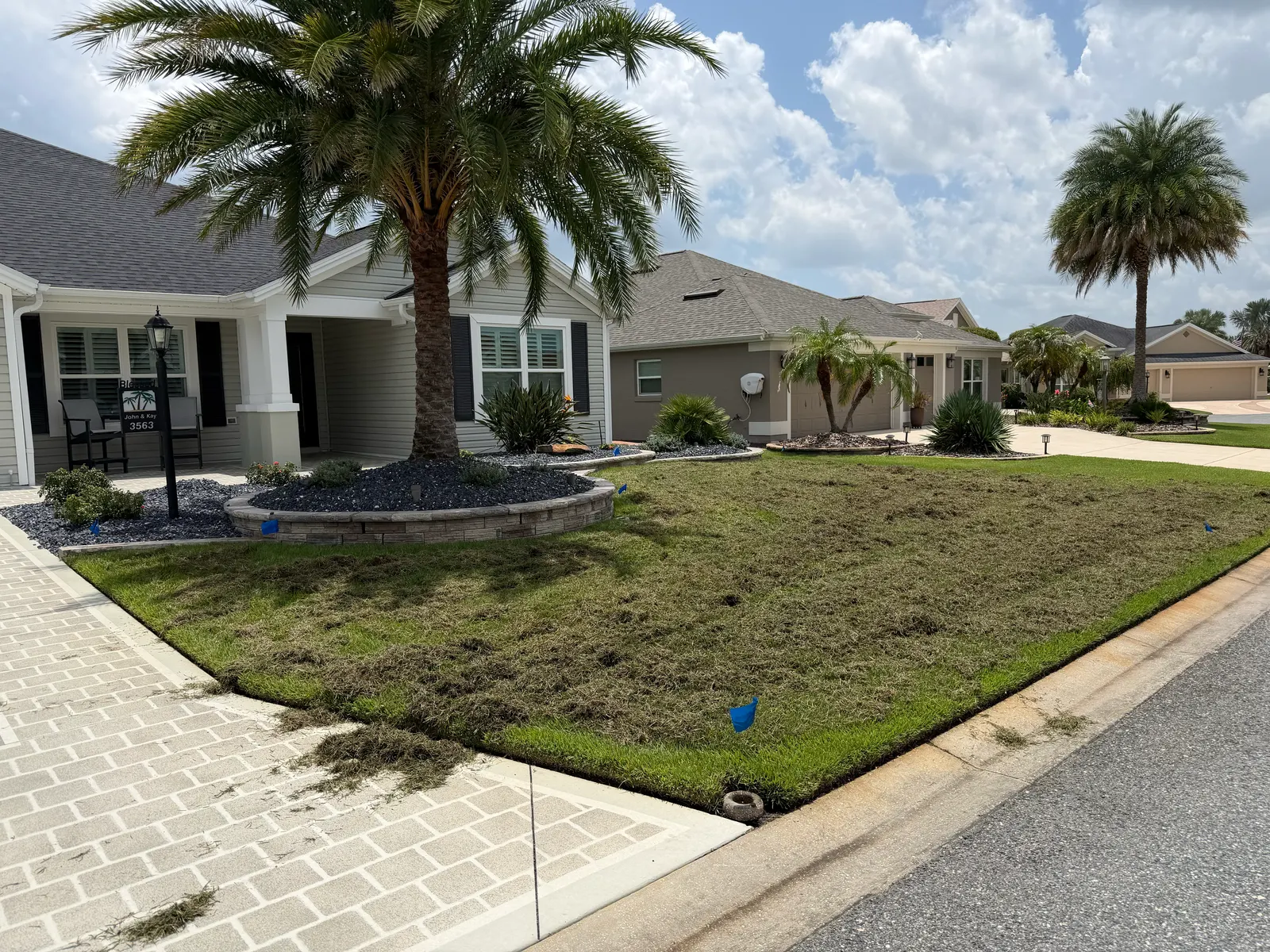
Renting a power rake: DIY dethatching without wrecking your lawn
Power rakes rent for about $80–100 a half day. The machine is the easy part—it's the grass identification, the depth setting, and the mountain of debris that get people in trouble.
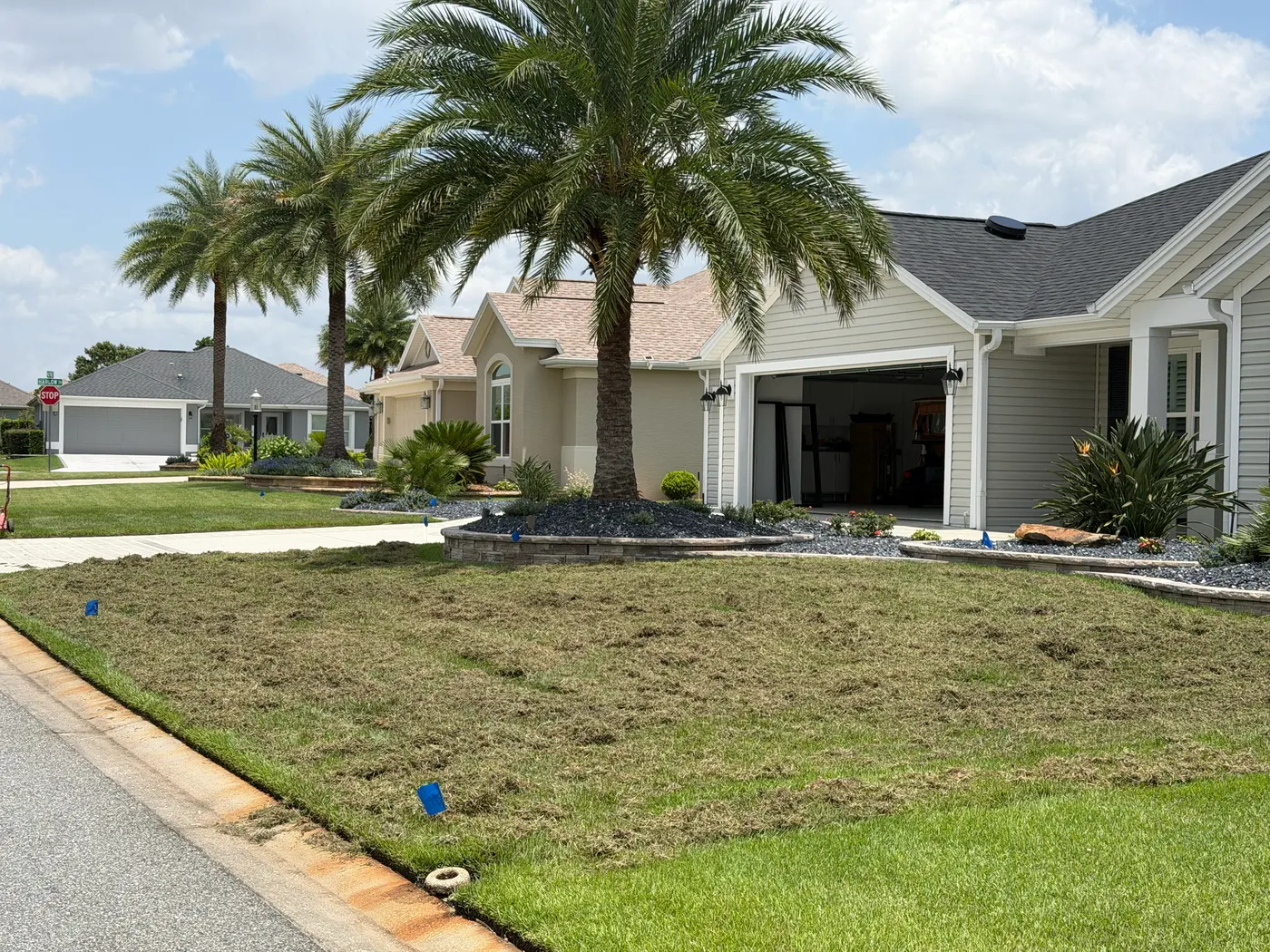
Of the three big soil jobs, dethatching is the one that most often goes wrong as a DIY project. Not because the machine is hard to run—it isn't—but because the machine has no idea what kind of grass it's running on. That judgment call is yours, and it's the one that decides whether your lawn recovers in weeks or struggles for a season.
First: know your grass. This decides everything.
Most central Villages lawns are Zoysia, which tolerates power raking when it's done at the right depth. St. Augustine is a different story: it spreads by surface runners called stolons, and a power rake tears those runners apart. Dethatch a St. Augustine lawn aggressively and you can do damage it may not recover from. We've written a whole post on why we don't power-dethatch St. Augustine—if you're not completely sure which grass you have, stop here and find out first.
Renting the machine
A power rake runs about $80–100 for a four-hour window. Same transport problem as an aerator: it's a 150–250 pound machine, so you need a pickup or a trailer rental, a ramp, and preferably a second person.
Setting the depth
Rental counters set the tines to a conservative middle setting and hand it over. Too shallow does nothing; too deep shreds living turf along with the dead layer. The safe method is a test strip in a back corner: run one pass, kneel down, and look at what came up. Dead brown material—good. Green shreds and torn runners—raise the tines.
The part nobody warns you about: the debris
Here's the real surprise. Dethatching pulls up roughly 120 gallons of thatch per 1,000 square feet of lawn. Standard 30-gallon paper lawn bags run about $3 each at Lowe's or Home Depot, and the math adds up fast:
| Lawn size | Debris | Bags needed | Bag cost |
|---|---|---|---|
| 1,000 sq ft | ~120 gallons | 4 | ~$12 |
| 2,500 sq ft | ~300 gallons | 10 | ~$30 |
| 4,000 sq ft | ~480 gallons | 16 | ~$48 |
That's an indirect cost almost nobody budgets—and bagging is the easy half. Every gallon of that material has to be raked into piles first, stuffed into bags by hand, and staged for yard-waste pickup. The machine part of the job takes an hour. The raking and bagging takes the rest of the afternoon, and it's the sweatiest part of the whole project.
Aftercare
A freshly dethatched lawn looks worse before it looks better—that's normal and temporary. Water lightly, mow at your normal height, and hold off on weed treatments for a few weeks while the turf fills back in.
What we do differently
When we dethatch, we bring the commercial machine, make the grass-type call lawn by lawn—Zoysia gets the full treatment, St. Augustine gets assessed and spot-treated instead—and here's the part our customers appreciate most: every bag of debris leaves with us, the same visit. No wall of brown bags at the curb, no second afternoon of raking. You get an upfront price online before we ever show up.
Ready to price this service?
Get clear, upfront pricing for dethatching in under a minute.