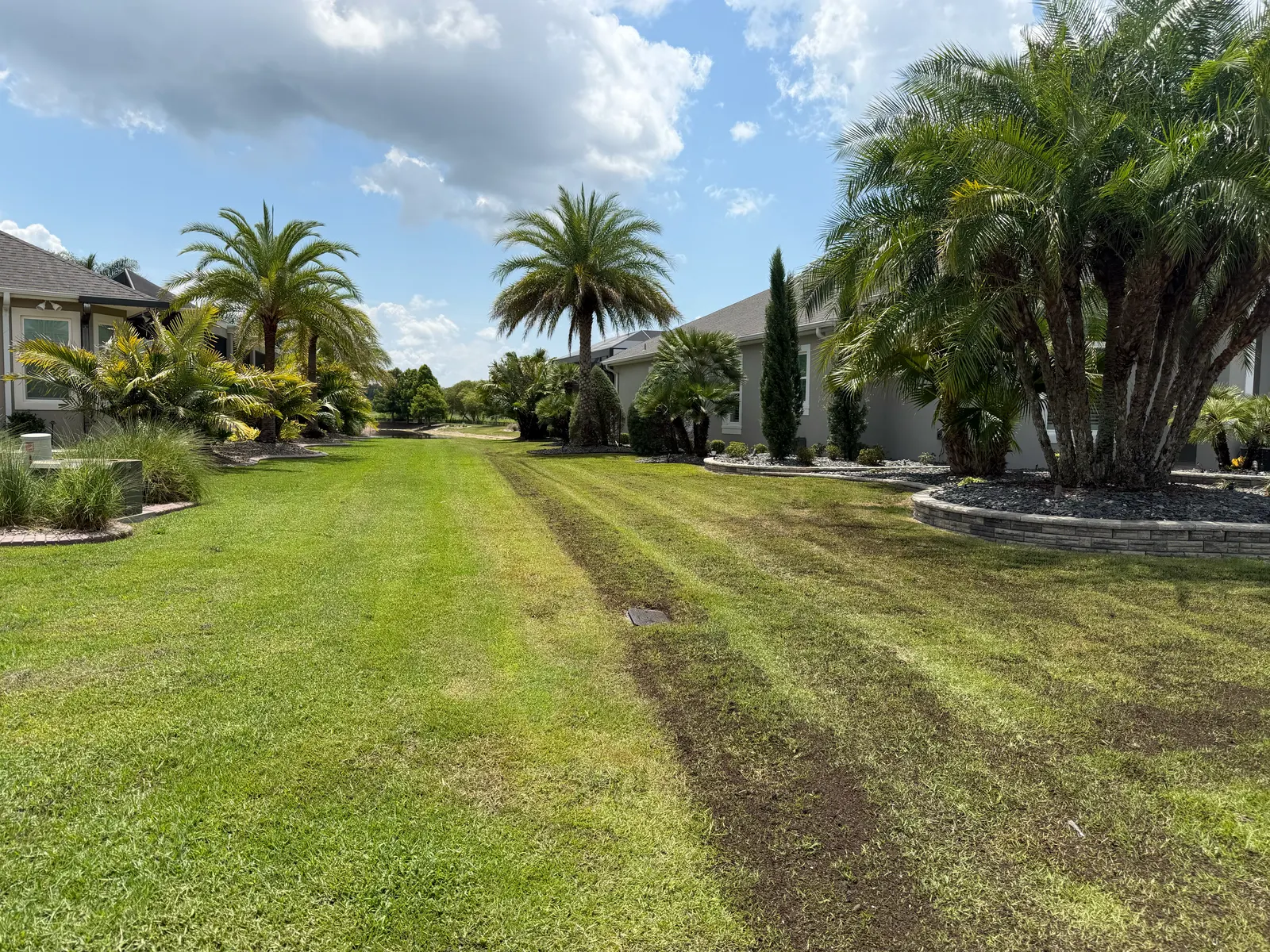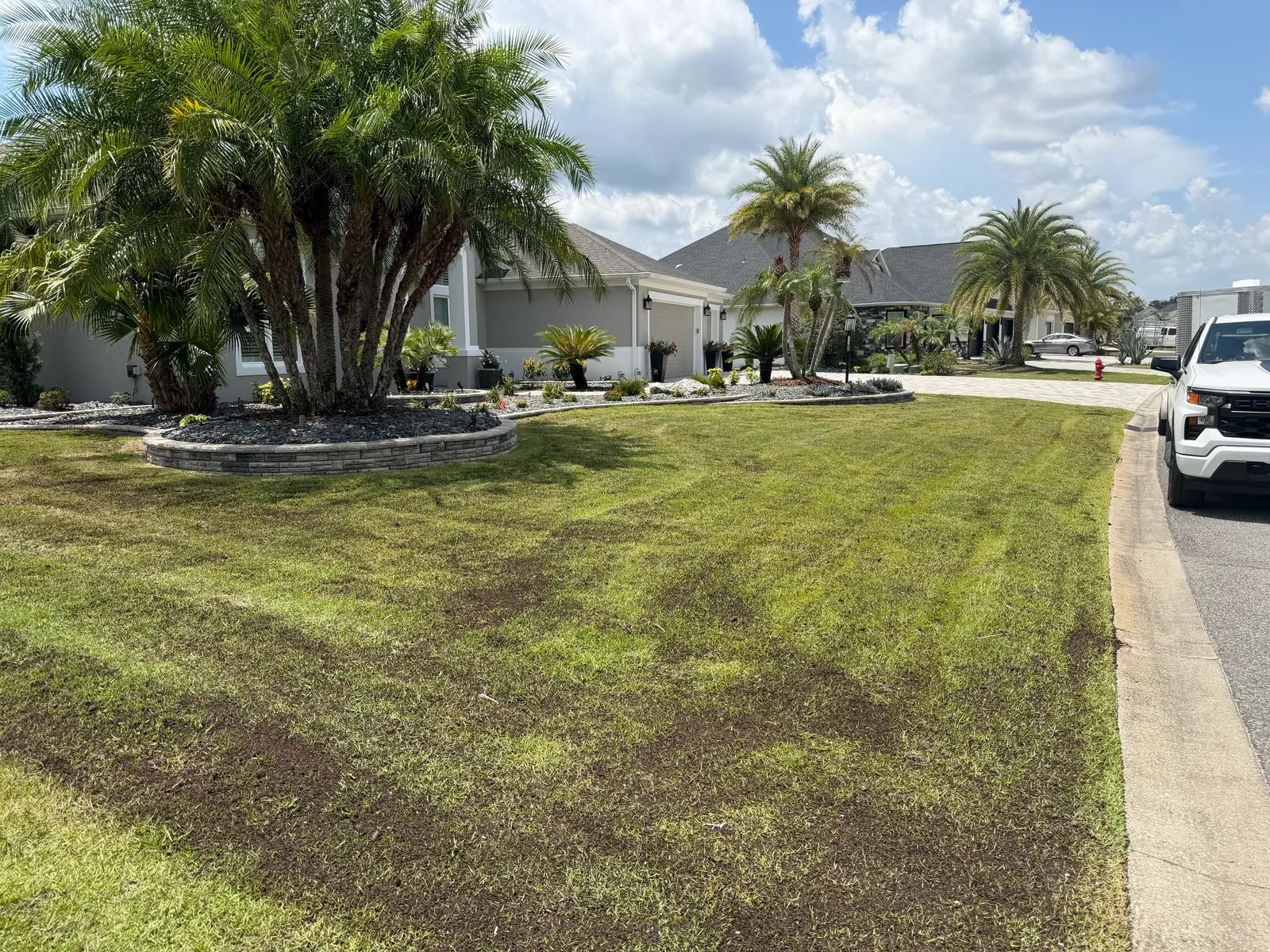
Top dressing a Villages lawn by hand: the bag math
Spreading compost over a lawn sounds simple—until you do the math on bags, wheelbarrow trips, and raking. Here's the full picture before you commit your weekend.
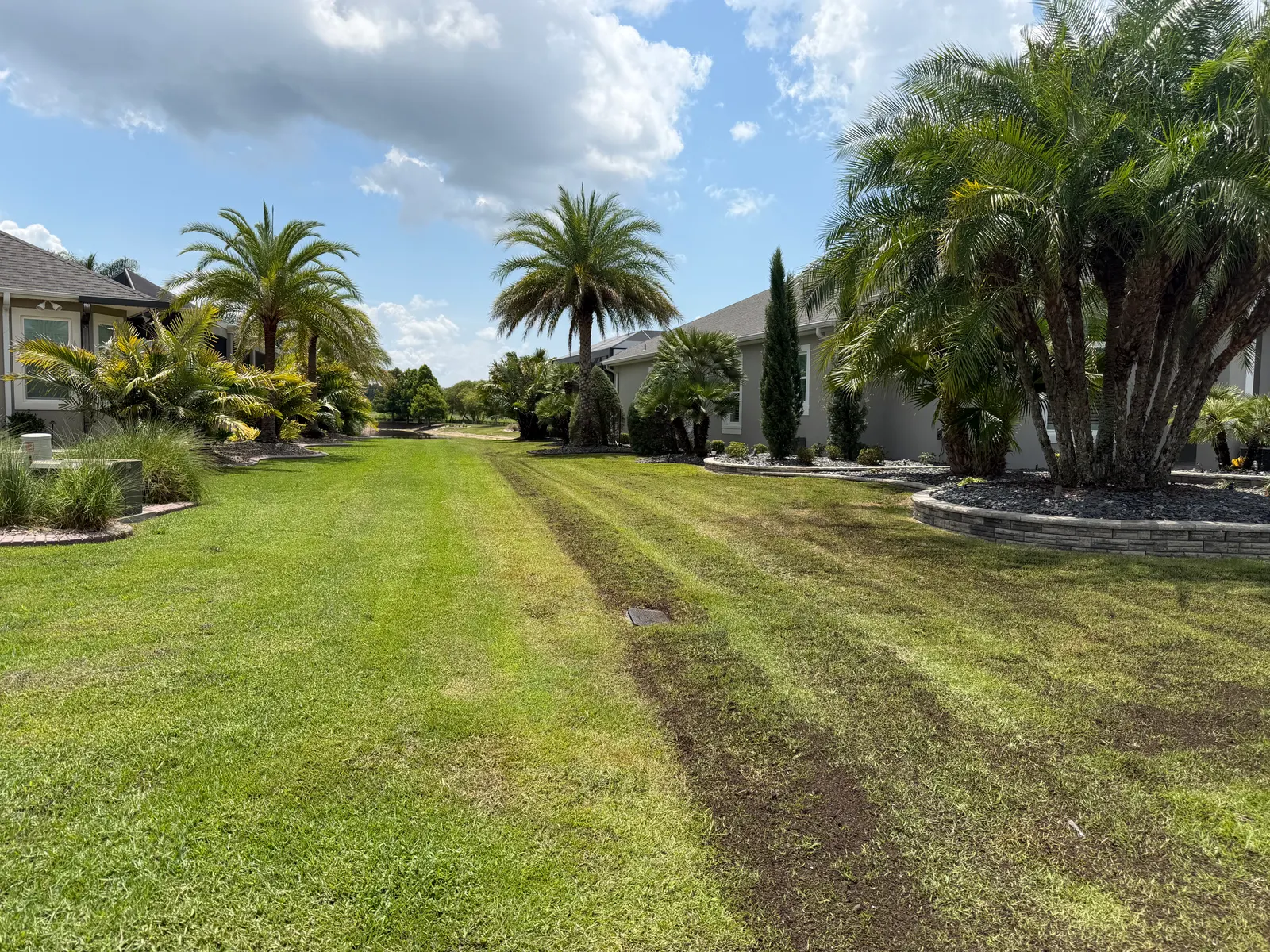
Of the three big soil jobs, top dressing looks the most DIY-friendly. There's no machine to rent, no engine to start—just bags of compost and a rake. That's true. It's also, by a wide margin, the most physically demanding of the three. The reason is simple: soil is heavy, and a lawn needs a lot more of it than most people guess.
How much material a lawn actually takes
A proper top dressing is a thin, even layer—roughly a quarter to half an inch across the whole lawn. Run the numbers and that works out to about 0.75–1.5 cubic yards of material per 1,000 square feet.
Bagged compost—the Black Kow and Comand you'll find at the garden center—comes in bags of roughly 0.75 to 1 cubic foot. There are 27 cubic feet in a cubic yard. So per 1,000 square feet of lawn, you're looking at 25–50+ bags. For a typical Villages lot, that's a full pallet or more.
Moving it
The pallet doesn't come to your backyard. Every one of those 40-to-50-pound bags gets lifted at the store, loaded into a vehicle, unloaded at home, and moved again by wheelbarrow to where it's needed. Most bags get handled three or four times before the soil ever touches grass. This is the step where "spreading some compost" becomes the hardest workout of your month.
Spreading it evenly is the skill
You have two DIY options. The first is the shovel-and-fling method—rip bags open, scatter shovelfuls, and rake it out. It works, but it's slow and it's hard to get even. The second is renting a compost spreader, which spreads beautifully but puts you right back in the rental-counter-and-trailer routine.
Evenness isn't cosmetic, either. Anywhere the material sits in a pile on top of the grass, it smothers the blades underneath—and under the Florida sun, a smothered patch burns. The fix for uneven spreading is always the same: more raking.
Raking it in
This is the step that separates a good top dressing from an expensive mistake. Every bit of material needs to be worked down off the grass blades and into soil contact—brooming and back-raking, section by section, before the heat of the day sets in. Done right, the lawn looks nearly clean when you're finished, with the soil down where it belongs.
When DIY top dressing makes sense
Honestly? For small jobs, it's a great DIY project. Leveling a low spot, patching a corner, dressing a strip the dog wore out—a few bags and a rake, totally manageable. It's whole-lawn coverage where the math turns brutal: a pallet of bags, dozens of wheelbarrow trips, and hours of raking.
How we do it
Our top-dressing setup spreads bulk material in an even layer, one pass at a time—no bags, no piles, no burn spots. What takes a DIY weekend takes us a morning. If the bag math has you rethinking the weekend, get an instant quote and see what the same job looks like with the machines doing the lifting.
Ready to price this service?
Get clear, upfront pricing for top dressing in under a minute.